
What Is Honeycomb Cookware? Benefits, Uses & How It Works
If you have recently been looking for better cookware for everyday cooking, you may have come across the term Honeycomb Cookware.
But what exactly is honeycomb cookware? Why does the cooking surface have a honeycomb pattern? Is it just a design, or does it actually make a difference while cooking?
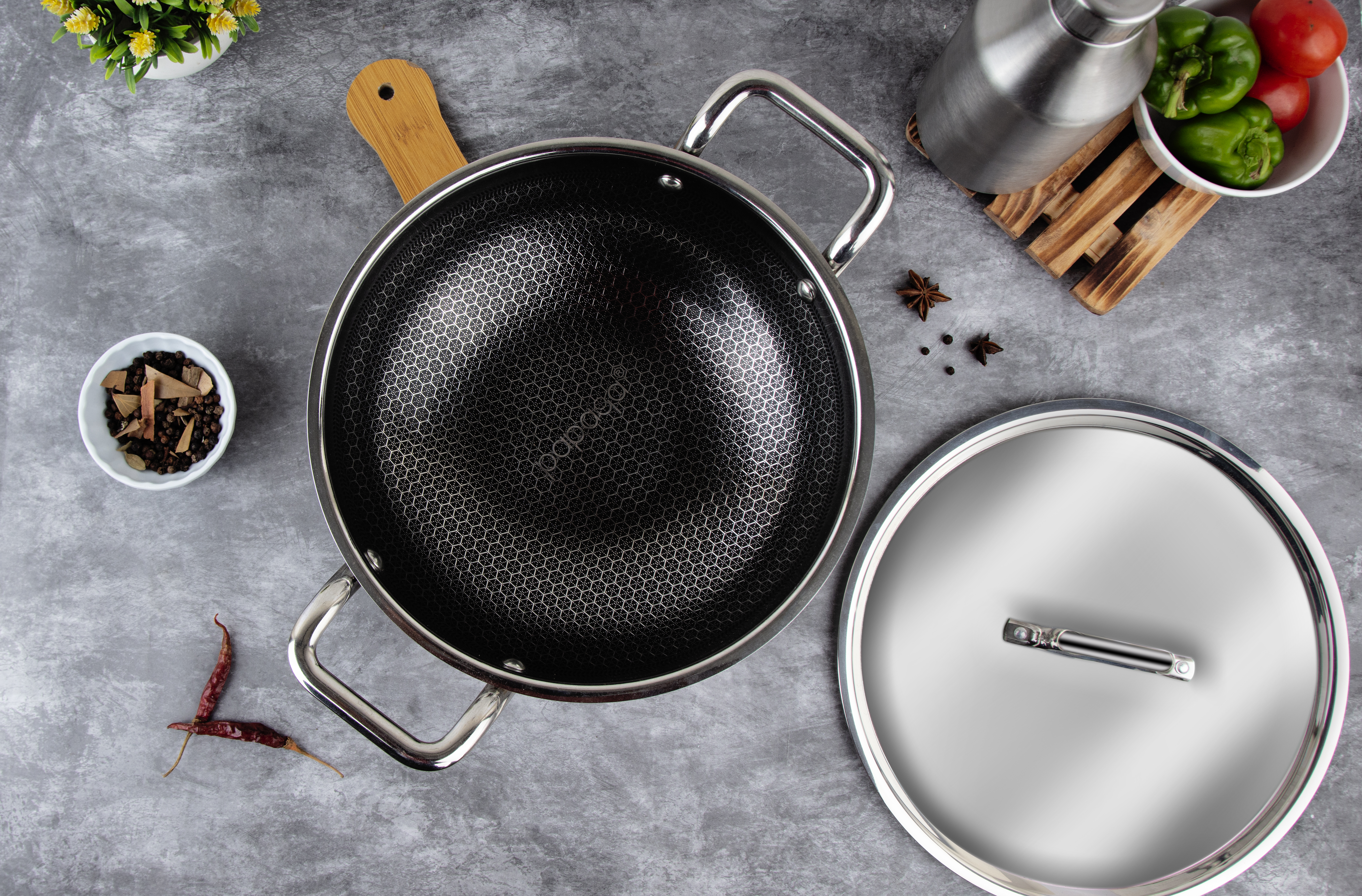
Honeycomb cookware is designed to combine the durability and cooking characteristics of stainless steel with improved food release and everyday convenience. The distinctive raised honeycomb pattern is not simply decorative—it is part of the cookware's surface design.
In this guide, we will explain what honeycomb cookware is, how the honeycomb surface works, its benefits, how to use it properly, and why it is becoming an interesting option for modern kitchens.
What Is Honeycomb Cookware?
Honeycomb cookware is cookware that features a hexagonal or honeycomb-style pattern on its cooking surface.
The pattern is generally created by etching, engraving, embossing, or forming a structured surface on the pan. Depending on the construction, the raised stainless-steel sections can work together with recessed areas or a coating to create a more durable cooking surface.
The name comes from its appearance—the pattern looks similar to the cells of a honeycomb.
But the important part is not how it looks.
The purpose of the honeycomb structure is to change how the cooking surface interacts with food, utensils, oil and heat.
How Does Honeycomb Cookware Work?
Think of a traditional flat non-stick surface.
The cooking surface is mostly flat, and the coating is directly exposed to everyday cooking and utensil contact.
In many hybrid honeycomb designs, the surface uses raised stainless-steel ridges with recessed areas. These raised sections can help protect the recessed cooking surface from some direct abrasion during regular use.
This creates a cooking surface that aims to give you a balance between:
-
Stainless-steel durability
-
Better food release
-
Easier everyday cooking
-
Good browning and searing
-
Resistance to everyday surface wear
The exact performance depends on the cookware's construction, material, coating and manufacturing quality, so not every honeycomb pan will perform exactly the same way.
Why Is Honeycomb Cookware Becoming Popular?
One of the biggest reasons is simple:
People want cookware that is easy to cook with but also built to last.
Traditional stainless steel can be excellent for high-temperature cooking and browning, but food can stick if the pan is not preheated and used correctly.
Traditional non-stick cookware can provide easy food release, but the coating can wear over time.
Honeycomb cookware attempts to bring some of these advantages together through its structured cooking surface.
1. Better Protection for the Cooking Surface
The raised honeycomb pattern can act as a protective framework over recessed areas of the cooking surface.
This can reduce direct contact between cooking utensils and the recessed sections, helping the surface handle regular cooking better than a completely exposed flat coating in certain hybrid designs.
However, it is still important to follow the manufacturer's care instructions. "Honeycomb" does not automatically mean that every pan is completely scratch-proof.
2. Helps With Food Release
One of the main reasons people choose honeycomb cookware is the easier food release.
The structured surface can hold a thin film of cooking oil across the cooking area, while the raised sections reduce the amount of direct surface contact with food.
This can make everyday cooking more convenient.
However, good technique still matters.
Preheating the pan properly, using an appropriate amount of oil and controlling the heat can make a significant difference to cooking performance.
3. Good for Searing and Browning
Honeycomb cookware can also be useful when you want more than just low-stick cooking.
Stainless steel surfaces are valued for their ability to handle browning and searing, and honeycomb hybrid designs aim to retain some of that cooking character while improving everyday food release.
This makes honeycomb cookware suitable for foods such as:
-
Paneer
-
Vegetables
-
Chicken
-
Fish
-
Eggs
-
Omelettes
-
Stir-fried dishes
-
Sautéed vegetables
The final result will depend on the specific cookware construction and your cooking technique.
4. Useful for Everyday Cooking
A good piece of cookware should not only work for one recipe.
Honeycomb cookware can be used for many everyday cooking tasks, including sautéing, frying, searing and preparing Indian dishes.
For an Indian kitchen, a honeycomb kadai can be particularly useful because a kadai is regularly used for everything from vegetables and gravies to frying and sautéing.
5. Easy Cleaning With the Right Cooking Technique
Because honeycomb cookware is designed to reduce sticking, cleaning can be easier when the pan is used correctly.
But there is one important point:
Honeycomb does not mean food can never stick.
If food is cooked at excessively high temperatures, burnt onto the surface or left without enough oil where required, residue can still build up inside the textured areas.
The best approach is to allow the cookware to cool appropriately and clean it according to the manufacturer's care instructions.
Honeycomb Cookware vs Traditional Non-Stick Cookware
So, is honeycomb cookware the same as regular non-stick cookware?
No.
The construction can be quite different.
| Feature | Honeycomb Cookware | Traditional Non-Stick |
|---|---|---|
| Cooking Surface | Structured honeycomb pattern | Generally flat coated surface |
| Main Advantage | Balance of durability and food release | Easy food release |
| Searing | Generally well suited | Depends on cookware and coating |
| Surface Protection | Raised structure can protect recessed areas in hybrid designs | Coating is more directly exposed |
| Cooking Experience | Hybrid-style cooking experience | Low-stick cooking |
| Maintenance | Requires proper care | Requires proper care |
The right choice ultimately depends on how you cook and what you expect from your cookware.
What Is Triply Honeycomb Cookware?
Now let's talk about another term you may see while shopping:
Triply Honeycomb Cookware.
"Triply" generally refers to a cookware construction made using three layers of metal, designed to improve heat distribution and cooking performance.
When a honeycomb cooking surface is combined with a triply construction, you get two different design concepts working together:
Triply construction → cookware body and heat management
Honeycomb surface → structured cooking surface
Papaya Kitchenware currently offers PAPAYA TRIPLY HONEYCOMB KADAI in both glass-lid and stainless-steel-lid versions.
This makes the product particularly relevant for people looking for a durable, modern kadai for everyday Indian cooking.
How to Use Honeycomb Cookware Properly
Want the best experience from your honeycomb cookware?
Follow these simple steps.
Step 1: Preheat the Pan
Place the cookware on the stove and allow it to warm gradually.
Avoid immediately putting food into a completely cold pan if the manufacturer's instructions recommend preheating.
Step 2: Add Oil
Add an appropriate amount of cooking oil depending on the recipe.
You do not need excessive oil, but using the right amount can improve food release.
Step 3: Control the Heat
Avoid unnecessarily high heat.
Medium or medium-high heat is often enough for everyday cooking, depending on the recipe and cookware construction.
Step 4: Let the Food Cook
Don't continuously move food around immediately after putting it into the pan.
Allow it to cook and naturally develop a surface before turning or stirring.
Step 5: Clean After Cooking
Once the cookware has cooled appropriately, clean it according to the manufacturer's instructions.
Avoid harsh cleaning methods unless specifically recommended.
Is Honeycomb Cookware Completely Non-Stick?
This is one of the most important questions.
Not necessarily.
The term "honeycomb" describes the surface structure. Different manufacturers can use different constructions, coatings and materials.
Some honeycomb cookware uses a hybrid design where stainless-steel ridges are combined with a non-stick coating in the recessed areas. Other products may use textured stainless steel without a conventional non-stick coating.
So before buying, always check the actual product specifications rather than assuming that every honeycomb pan is identical.
Who Should Consider Honeycomb Cookware?
Honeycomb cookware can be a good option for people who want:
-
A more durable alternative to conventional flat non-stick cookware
-
Easier food release than traditional stainless steel
-
A cookware surface suitable for everyday cooking
-
A pan or kadai suitable for sautéing and searing
-
A modern cookware design
-
A balance between stainless-steel characteristics and convenient cooking
For Indian households, a honeycomb kadai can be especially practical because it can handle a wide variety of everyday dishes.
Why Choose a Honeycomb Kadai?
A kadai is one of the most frequently used pieces of cookware in an Indian kitchen.
You can use it for:
Sabzi → Gravy → Paneer → Frying → Sautéing → Stir-frying → Curries
A honeycomb kadai brings the structured honeycomb cooking surface into this everyday format.
Papaya Kitchenware's Triply Honeycomb Kadai is available with both glass and stainless-steel lid options, giving customers a choice based on their cooking preference.
Final Thoughts
Honeycomb cookware is more than just a cookware trend.
Its distinctive surface is designed to create a different cooking experience by combining a structured surface with the characteristics of the underlying cookware construction.
The biggest attraction is the balance it aims to provide:
Durability + Food Release + Everyday Convenience + Cooking Performance
But remember—not all honeycomb cookware is made the same.
Always look at the material, construction, surface technology, thickness, heat compatibility and care instructions before choosing a product.
If you're looking for cookware that fits modern everyday Indian cooking while offering a combination of stainless-steel construction and a honeycomb cooking surface, Papaya Kitchenware's Triply Honeycomb Kadai is one option worth exploring.
Frequently Asked Questions
1. What is honeycomb cookware?
Honeycomb cookware features a hexagonal or honeycomb-style structured cooking surface designed to improve the balance between durability and food release.
2. Is honeycomb cookware non-stick?
It depends on the specific product. Some honeycomb cookware uses a hybrid design with a non-stick coating in recessed areas, while other designs use textured stainless steel without a conventional coating.
3. Is honeycomb cookware good for Indian cooking?
Yes. A honeycomb kadai can be used for many common Indian cooking tasks, including sautéing, frying, preparing vegetables, paneer and gravies.
4. What is triply honeycomb cookware?
It combines a triply metal construction with a honeycomb-patterned cooking surface. The two technologies serve different purposes within the cookware.
5. Is honeycomb cookware scratch-proof?
No cookware should automatically be considered completely scratch-proof just because it has a honeycomb pattern. Always follow the manufacturer's recommended utensil and cleaning guidelines.
6. How do I maintain honeycomb cookware?
Use appropriate heat, follow the recommended cooking technique and clean the cookware according to the manufacturer's care instructions.
Explore Papaya Kitchenware's Honeycomb Cookware Collection
Looking for a modern kadai for everyday cooking? Explore the Papaya Triply Honeycomb Kadai and discover a cookware design made for the modern kitchen.